Peptides: What They Are, How They Work, and Why More People Are Using Them for Wellness and Recovery

Peptides have quickly become one of the most talked-about topics in health, wellness, recovery, and medical aesthetics. But with so much information online — and plenty of misinformation mixed in — many people are left wondering what peptides actually are, whether they work, and if they’re safe.
At Body Vitality in Gilbert, AZ, we believe patients deserve honest, medically guided conversations about peptide therapy, including both the potential benefits and the limitations. While peptides are not magic solutions, research continues to explore their role in supporting recovery, metabolism, body composition, healthy aging, energy, and overall wellness.
What Are Peptides?
Peptides are short chains of amino acids that act as signaling molecules in the body. In simple terms, they help tell the body to perform specific functions.
Your body naturally produces peptides already. Different peptides may play roles in:
- hormone signaling
- muscle recovery
- tissue repair
- metabolism
- sleep regulation
- appetite
- skin health
- immune function
Therapeutic peptides are designed to mimic or support some of these natural processes.
Why Are Peptides Becoming So Popular?
Many people today are looking for proactive ways to support:
- energy
- recovery
- healthy aging
- metabolism
- body composition
- sleep
- performance
- overall wellness
Peptides have gained attention because some may help support these systems in targeted ways when combined with healthy lifestyle habits and medical guidance.
At Body Vitality, peptide therapy is often discussed alongside:
- wellness optimization
- weight management
- fitness goals
- hormone support
- recovery
- aesthetic and skin health
Peptides Are Not “Steroids”
One of the biggest misconceptions online is that peptides are the same as anabolic steroids.
They are not.
Steroids directly introduce hormones into the body. Peptides generally work by signaling the body to support or regulate certain natural processes.
That does not mean peptides are risk-free or appropriate for everyone, but they are fundamentally different from anabolic steroid use.
What Can Peptides Potentially Help Support?
Depending on the specific peptide and the patient’s goals, peptide therapy may help support:
- muscle recovery
- workout recovery
- sleep quality
- metabolism
- appetite regulation
- body composition
- skin health
- collagen production
- energy levels
- wellness optimization
- healthy aging goals
Some peptides are also being explored in research related to inflammation, tissue repair, and metabolic health.
The Importance of Medical Oversight
This is where many people get into trouble online.
There are countless websites and influencers selling peptides with little transparency about:
- sourcing
- purity
- dosing
- safety
- medical screening
Not all peptide products are created equal.
At Body Vitality in Gilbert and Arizona’s East Valley, peptide therapy is approached through a medical and wellness lens that focuses on patient safety, education, and individualized care.
That may include:
- health evaluations
- bloodwork
- symptom review
- body composition analysis
- monitoring and follow-up
Research on Peptides Continues to Grow
Peptides remain an active area of medical and scientific research.
Some peptides have more established clinical use and supporting data than others. Some are still being researched and evaluated for broader applications.
A trustworthy provider should be honest about:
- what is well-supported
- what is still emerging
- realistic expectations
- potential side effects
- who may or may not be a good candidate
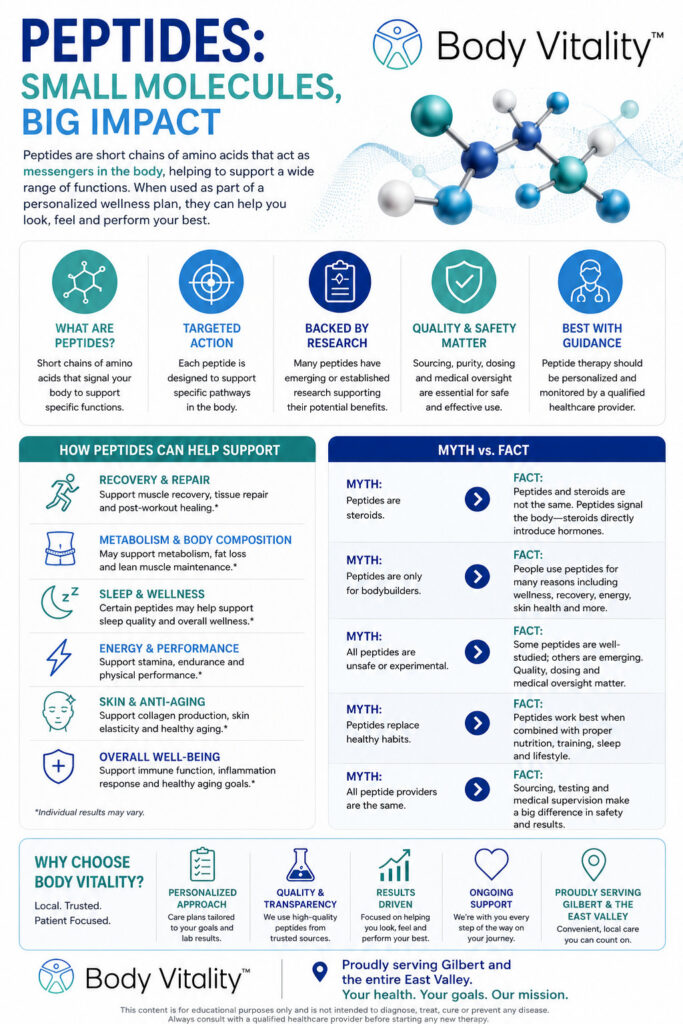
Myth vs. Fact About Peptides
Myth: Peptides are only for bodybuilders.
Fact: Many people exploring peptide therapy are simply looking to support wellness, recovery, energy, metabolism, or healthy aging.
Myth: All peptides are unsafe or experimental.
Fact: Some peptides have been studied extensively, while others are still emerging. Quality, sourcing, medical oversight, and patient selection matter significantly.
Myth: Peptides replace healthy habits.
Fact: Peptides are not substitutes for nutrition, exercise, sleep, or lifestyle changes. They are typically used as part of a broader wellness strategy.
Myth: All peptide providers are the same.
Fact: There is a major difference between medically supervised peptide therapy and unregulated online peptide sellers.
Why Patients in Gilbert and the East Valley Are Exploring Peptides
Many adults balancing work, family, stress, fitness goals, and long-term health are looking for ways to feel better, recover more effectively, and stay proactive with their wellness.
For some patients, peptide therapy becomes part of a larger personalized plan that may also include:
- hormone optimization
- medical weight loss
- IV therapy
- supplement stacks
- bloodwork
- InBody scans
- nutrition support
- recovery-focused wellness care
Frequently Asked Questions About Peptides
What are peptides used for?
Peptides are being explored for a variety of wellness and medical applications, including recovery, metabolism, muscle support, sleep, skin health, body composition, and healthy aging support.
Are peptides safe?
Safety depends on the specific peptide, dosing, patient health history, sourcing quality, and medical supervision. Peptide therapy should always be discussed with a qualified healthcare provider.
Do peptides actually work?
Some peptides have promising research and clinical use supporting specific applications, while others are still being studied. Results vary based on the individual, lifestyle factors, and treatment goals.
Are peptides FDA approved?
Some peptide-based medications are FDA approved for specific medical uses, while others may be compounded or used in ways that are still being researched. Patients should always ask questions about sourcing and medical oversight.
Are peptides the same as steroids?
No. Peptides and anabolic steroids work differently in the body. Peptides generally act as signaling molecules rather than directly replacing hormones.
Can peptides help with weight loss?
Certain peptides may support appetite regulation, metabolism, body composition, or wellness goals when combined with nutrition, exercise, and medical guidance.
Can peptides help with recovery and energy?
Some peptides are being explored for their potential role in supporting recovery, sleep quality, tissue repair, and overall wellness optimization.
Are online peptides safe?
One of the biggest concerns with online peptide sellers is inconsistent sourcing, purity, dosing accuracy, and lack of medical oversight. Patients should be cautious about purchasing peptides from unverified sources.
How long does peptide therapy take to work?
This depends on the peptide, treatment goals, consistency, lifestyle factors, and the individual patient. Some patients notice changes within weeks, while others require longer-term support.
Where can I get medically guided peptide therapy in Gilbert, AZ?
Body Vitality in Gilbert serves patients throughout Arizona’s East Valley with wellness-focused care that may include peptide therapy, bloodwork, medical weight loss support, hormone optimization, IV therapy, supplement stacks, and personalized wellness planning.
Personalized Wellness Support at Body Vitality
Peptides are not shortcuts or miracle treatments, but they are becoming an increasingly discussed tool in modern wellness and recovery care. At Body Vitality, the focus is on helping patients make informed decisions with realistic expectations, reliable sourcing, and individualized guidance designed around long-term health and wellness goals.